Learning to read in the early years enquiry: Crossford Primary School, Fife Council

Published 14/07/2026.  Last updated 31/08/2026

The Learning to Read in the Early Years programme and the associated professional learning resource provides an in-depth, research-informed opportunity for schools and ELC settings to strengthen early reading practice. The programme supports participants to connect research with classroom and setting practice through videos, reflective activities, professional dialogue and collaborative learning. Delivered to trios of practitioners and leaders within schools or settings, the programme culminates in a small-scale enquiry project tailored to local priorities and learner needs.

Enquiry focus

In both primary one and the nursery, we observed that some children did not access texts/books through play or the library area regularly.

Parent and child surveys revealed that reading frequency and enjoyment vary, with some children read to only a few times per week.

Crossford is a village in Fife approximately 1.5 miles west of Dunfermline with a population of approximately 2320. We currently have 181 children in 7 classes in primary school and 37 children accessing ELC throughout the week.

The average SIMD is 8.6 with 1% living in SIMD 1 and 2. 4% of children at Crossford have English as an additional language.

Staff involved were:

  • Robyn Traquair (P1 Class Teacher)
  • Claire Mason (Early Years Officer)
  • Stacey Sullivan (Principal Teacher)

By March 2025, 85% of P1 children will select texts for enjoyment in the classroom and outdoors.

80% of targeted nursery children will access stories for enjoyment that links to their interests.

75% of families in nursery and P1 will have access to and use a school/nursery lending library.

Parents shared their child’s favourite books and stories, helping to shape displays and reading experiences that reflected children’s interests.

Literacy-rich spaces were developed across Nursery and P1, with accessible books, story areas, outdoor reading opportunities, and quiet spaces for sharing stories.

Children’s interests were gathered through surveys, discussions, and voting activities, informing story selections and promoting greater engagement with reading.

Props, puppets, photographs, and retelling activities were introduced to encourage children to explore and discuss stories in meaningful ways.

Primary one pupils took part in paired reading with buddies, while weekly Bookbug sessions brought together children, parents, and carers to enjoy stories and songs.
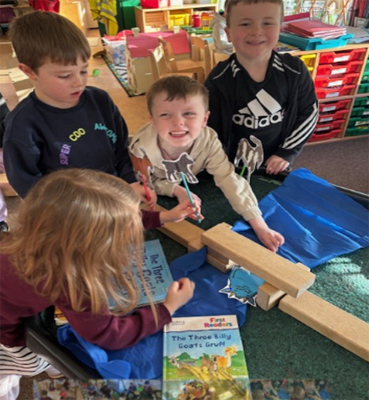
Photo of children with books and props

Through our targeted approach, we were able to achieve all the aims set out in our project

The children have enjoyed sharing books with the senior children in our school as well as with their families at home. The book corner is being accessed more regularly and the children use props and puppets to act out our stories. More families are also borrowing books to take home.

We analysed the end of year eLIPS scores which highlighted only two children did not hit their expected milestones for the saying category. eLIPS (Early Language in Play Settings) is an evidence-based observational tool used by practitioners to monitor and assess language and communication development. The ‘saying’ category refers to ‘expressive language’ or what the child has said. We also looked at our baseline starting P1 scores for the following August which showed only one child below national average for literacy.
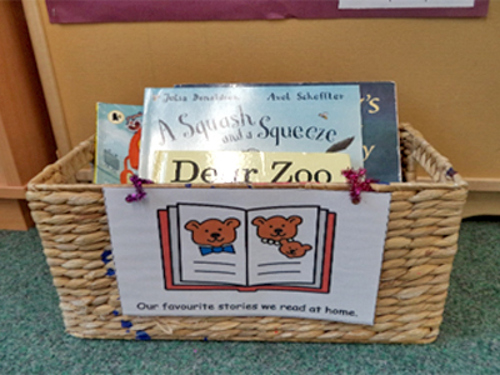
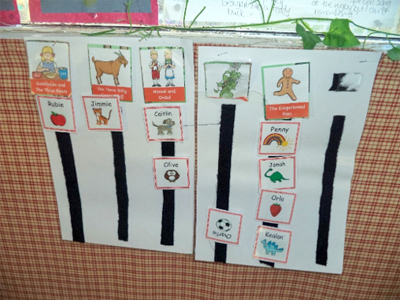
Photo of book basket

Photo of wall chart showing favourite story votes

The original focus was narrowed to ensure the project was manageable and achievable within the available timescale.

Book selections were reviewed and updated to better match children's interests, ages, and stages of development.

The enquiry reinforced the importance of reading from an early age and highlighted the need for practitioners to keep reading experiences engaging, relevant, and meaningful.

Staff faced barriers including absences, limited budgets and resources, noisy environments, diverse reading interests, and supporting children to develop confidence and positive reading identities.

How has the learning from the initial programme been taken further by you or your colleagues in your ongoing practice? How have you shared the learning with others?

The learning from this project has continued to influence practice across both Nursery and Primary One. In Nursery, literacy-rich environments continue to be developed, Bookbug sessions have been maintained and strengthened through links with the local playgroup, and staff have embedded Helicopter Stories into practice to further enhance children's literacy experiences.

The project’s findings were shared through staff development sessions, leading to the creation of a shared library space. Learning was also shared with families through shared learning events and targeted reading themes, helping to strengthen home-school links around reading.

Learning to read in the early years enquiry: Crossford Primary School, Fife Council

Published 14/07/2026.  Last updated 31/08/2026

The Learning to Read in the Early Years programme and the associated professional learning resource provides an in-depth, research-informed opportunity for schools and ELC settings to strengthen early reading practice. The programme supports participants to connect research with classroom and setting practice through videos, reflective activities, professional dialogue and collaborative learning. Delivered to trios of practitioners and leaders within schools or settings, the programme culminates in a small-scale enquiry project tailored to local priorities and learner needs.

Enquiry focus

In both primary one and the nursery, we observed that some children did not access texts/books through play or the library area regularly.

Parent and child surveys revealed that reading frequency and enjoyment vary, with some children read to only a few times per week.

Crossford is a village in Fife approximately 1.5 miles west of Dunfermline with a population of approximately 2320. We currently have 181 children in 7 classes in primary school and 37 children accessing ELC throughout the week.

The average SIMD is 8.6 with 1% living in SIMD 1 and 2. 4% of children at Crossford have English as an additional language.

Staff involved were:

  • Robyn Traquair (P1 Class Teacher)
  • Claire Mason (Early Years Officer)
  • Stacey Sullivan (Principal Teacher)

By March 2025, 85% of P1 children will select texts for enjoyment in the classroom and outdoors.

80% of targeted nursery children will access stories for enjoyment that links to their interests.

75% of families in nursery and P1 will have access to and use a school/nursery lending library.

Parents shared their child’s favourite books and stories, helping to shape displays and reading experiences that reflected children’s interests.

Literacy-rich spaces were developed across Nursery and P1, with accessible books, story areas, outdoor reading opportunities, and quiet spaces for sharing stories.

Children’s interests were gathered through surveys, discussions, and voting activities, informing story selections and promoting greater engagement with reading.

Props, puppets, photographs, and retelling activities were introduced to encourage children to explore and discuss stories in meaningful ways.

Primary one pupils took part in paired reading with buddies, while weekly Bookbug sessions brought together children, parents, and carers to enjoy stories and songs.

Photo of children with books and props

Through our targeted approach, we were able to achieve all the aims set out in our project

The children have enjoyed sharing books with the senior children in our school as well as with their families at home. The book corner is being accessed more regularly and the children use props and puppets to act out our stories. More families are also borrowing books to take home.

We analysed the end of year eLIPS scores which highlighted only two children did not hit their expected milestones for the saying category. eLIPS (Early Language in Play Settings) is an evidence-based observational tool used by practitioners to monitor and assess language and communication development. The ‘saying’ category refers to ‘expressive language’ or what the child has said. We also looked at our baseline starting P1 scores for the following August which showed only one child below national average for literacy.

Photo of book basket

Photo of wall chart showing favourite story votes

The original focus was narrowed to ensure the project was manageable and achievable within the available timescale.

Book selections were reviewed and updated to better match children's interests, ages, and stages of development.

The enquiry reinforced the importance of reading from an early age and highlighted the need for practitioners to keep reading experiences engaging, relevant, and meaningful.

Staff faced barriers including absences, limited budgets and resources, noisy environments, diverse reading interests, and supporting children to develop confidence and positive reading identities.

How has the learning from the initial programme been taken further by you or your colleagues in your ongoing practice? How have you shared the learning with others?

The learning from this project has continued to influence practice across both Nursery and Primary One. In Nursery, literacy-rich environments continue to be developed, Bookbug sessions have been maintained and strengthened through links with the local playgroup, and staff have embedded Helicopter Stories into practice to further enhance children's literacy experiences.

The project’s findings were shared through staff development sessions, leading to the creation of a shared library space. Learning was also shared with families through shared learning events and targeted reading themes, helping to strengthen home-school links around reading.